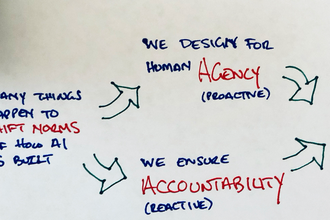
Mozilla is unveiling its latest Creative Media Awardees: 11 projects that use art, advocacy, and technology to unpack how AI is — and should be — designed
Research published today by Min’enhle Ncube from the University of Cape Town, notes that as maternal health AI solutions emerge, they risk replicating biases due to datasets that do not reflect culturally relevant practices and knowledge. Ncube’s research is supported by Mozilla as part of the Africa Mradi grants supporting interdisciplinary researchers investigating the impact of AI on communities in Eastern and Southern African regions.
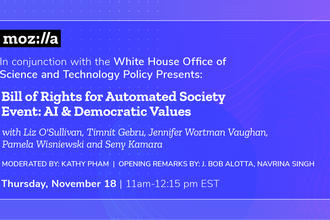
The White House Office of Science and Technology Policy (OSTP) and Mozilla Foundation are co-hosting a discussion about what an automated and democratic society should look like
Some of the current hype around artificial intelligence is perhaps overrated. At least that's what the average Brazilian believes and understands, considering the recently published data in the survey that measured perceptions about AI. for the Brazil UK Forum.
Research examines the collection of “body-centric data” which has experienced a dramatic surge since the COVID-19 pandemic and the rise of sophisticated AI tools.