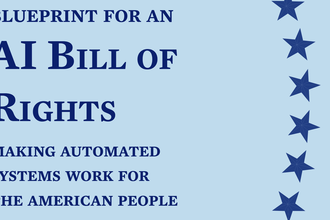
This week, the White House Office of Science and Technology Policy (OSTP) released “Blueprint for an AI Bill of Rights,” a collection of principles and practices to ensure AI systems align with democratic values and civil rights.
The Blueprint highlights exactly what we need more of online: more data privacy, more AI transparency, more protections from automated discrimination.
The Decolonized AI Futures Space at MozFest gathers together a series of 31+ workshops, discussions and art installations centered around the theme of decolonizing AI.
Through Mozilla’s Fellowship program, we aim to empower people and bold ideas that can shape a more human-centered internet. Over the past year, many of our fellows have been focused on the policy frameworks needed for the development of a trusted AI ecosystem. The spotlights below highlight the work of some of our fellows informing policy landscapes to support trustworthy AI.
This is the second blog in a three-part series exploring alternatives to platforms’ exploitative Terms-of-Service through building tools that empower improved transparency.
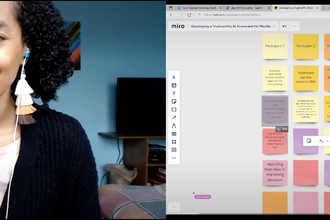
Students at HBCUs led a design thinking workshop on the criteria and considerations needed to develop Trustworthy AI at MozFest 2022. Here's what they learned.
New book: ‘Our Common AI Future — A Geopolitical Analysis and Road Map, for AI Driven Sustainable Development, Science and Data Diplomacy’ published by the fellow Francesco Lapenta.
What kinds of constructive f(r)iction could contribute towards improved transparency, evaluation, and human agency in the context of generative AI systems and the data and labor pipelines they depend on? We’re launching an initiative to explore just this.
We’re focusing MozFest 2023 conversations on four central issues: bias, transparency, data stewardship, and movement building. With these at the core, we’re rallying under eight Spaces and Experiences.