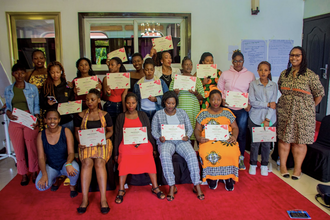
The pandemic brought more women in Rwanda online, but there is still a large online gender gap. Women@Web Rwanda, a non-profit that promotes the online participation of women, is a Mozilla IRL Fund Awardee.
What kinds of constructive f(r)iction could contribute towards improved transparency, evaluation, and human agency in the context of generative AI systems and the data and labor pipelines they depend on? We’re launching an initiative to explore just this.
Our grantmaking embodies the Africa Mradi’s non-extractive, collaborative approach. Local organizers, technologists, builders, educators, artists, and others are already exploring how technology impacts the lived realities of Africans. Mozilla wants to do this important work with them, rather than starting anew next to them.
This is the second blog in a three-part series exploring alternatives to platforms’ exploitative Terms-of-Service through building tools that empower improved transparency.
This is an analysis of the EU AI Acts by Amber Sinha, a Senior Mozilla Fellow in Trustworthy AI. For further Mozilla analysis of the draft legislation, click here.
Grantees from Mozilla’s Responsible Computer Science Challenge recently presented their work at Computing Research Association (CRA) Snowbird, the flagship conference for the leadership of the North American computing research community.