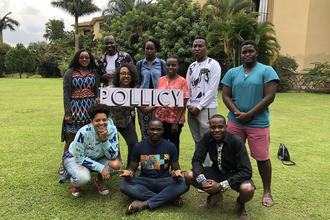
Misinformation manifests in many ways. Pollicy, a technology research group based out of Uganda, wants to spotlight the issue. With their Creative Media Award winning project Choose Your Own Fake News, the group has devised a game that shows how easily false information can spread.
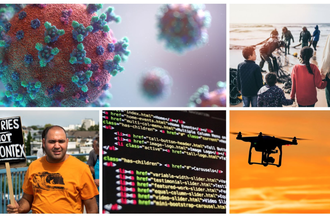
The fight against the COVID-19 pandemic continues to underscore inequality between races and cultures. We must ensure that innovation created to combat corona-virus does not unfairly target refugees, marginalized communities, the Indigenous communities and more.
In the struggle over who can train AI models and how, there’s a casualty many people don’t realize: The open web. Mozilla speaks with the team behind the Data Provenance Initiative, a Data Futures Lab Awardee.
The open-source index, built by Mozilla Data Futures Lab grantee Tattle, powers a browser extension that automatically identifies and redacts hateful words
The use of algorithmic systems for public use comes with this own set of transparency expectations. The history of administrative decisions offers a rich body which can clearly inform the threshold of transparency for these decisions and how to apply them.
Public administration, with its complex machinery and delegation of decision-making is uniquely suited as an analogy to algorithmic systems. The domain administrative law which governs it, thus, offers useful lessons for the transparency of AI systems.
Mozilla is announcing the seven winning projects, which will explore the impact of AI on diverse communities across the continent, and also the needs of these communities. More than $60,000 USD is being awarded to this inaugural cohort.